
Introduction
Facial recognition technology has rapidly shifted from sci‑fi fascination to everyday reality. From unlocking smartphones to enhancing public safety, its influence continues to expand. But what powers this powerful tech? In this article, we explore the science behind facial recognition technology — how it works, why it matters, and what lies ahead. With a clear, human‑centered explanation, you’ll understand both the breakthroughs and the challenges that shape its future.
Understanding the Basics: What Is Facial Recognition?
Facial recognition technology refers to systems that identify or verify a person’s identity using their face. Unlike simple photo tagging, modern systems rely on complex computations. These systems scan facial features, convert them into digital data, and compare them against stored records. The science behind facial recognition technology emerges at the intersection of computer vision, artificial intelligence, and biometric science. It is not just about detection — it’s about understanding unique human features in a meaningful way.
The Science That Powers Identification
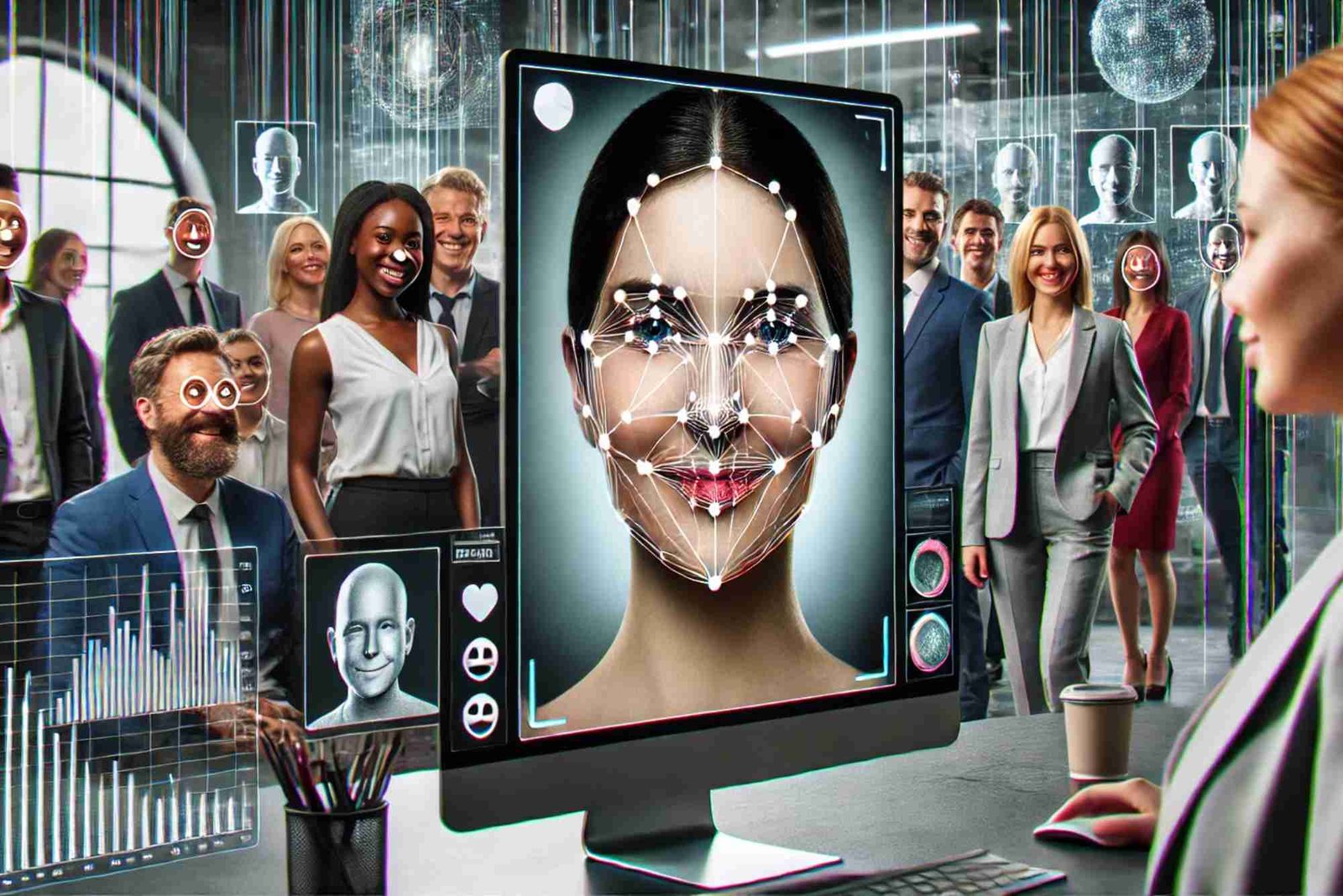
At its core, facial recognition blends mathematics with machine learning. Computers do not see faces like humans do. Instead, they break them down into measurable patterns. These patterns, like the distance between eyes or the curve of a jawline, become data points. Scientists call these “facial landmarks.” By converting images into numerical values, machines create a biometric map. This map is unique for each person, making comparison possible.
Computer Vision: The First Step
Computer vision enables machines to detect and interpret visual information from the world. For facial recognition, this means identifying that a face is present in an image or video. The system uses algorithms to locate facial structures and extract needed data. Early methods were rudimentary, but now advanced systems leverage deep learning to interpret faces with high accuracy, even in crowded or dynamic environments.
Machine Learning and Neural Networks
Machine learning takes those extracted patterns and teaches a system to recognize them. Through exposure to massive datasets, neural networks learn to distinguish one face from another. A typical neural network mimics the human brain with interconnected layers that process data. Each layer refines the representation, improving recognition accuracy over time. This learning process is why modern facial recognition systems are more reliable than ever before.
From Pixels to Patterns: How Recognition Happens
The journey from clicking a photo to identifying a person may seem complex, but each stage has a clear purpose. First, the system detects a face. Next, it analyzes key features and converts them into a digital template. Finally, it compares this template with a database to find a match. This comparison uses statistical methods to determine similarity scores. Only when the similarity exceeds a threshold does the system make a positive identification.

Detection and Alignment
Detection involves finding a face within a broader image scene. Alignment adjusts the face so that key features are placed in a standard position. This step ensures that the system compares apples to apples. Without alignment, variations in angle, lighting, or expression could confuse the system. Alignment increases accuracy by normalizing these variables before analysis.
Feature Extraction in Detail
Feature extraction isolates unique characteristics that differentiate one face from another. These include distances between facial points, contours of facial structures, and textures. Historically, this step used handcrafted features. Today, deep learning automatically learns the best features. These learned features are more adaptable and resilient to change.
Matching and Verification
Once extracted, facial data becomes a template — a mathematical representation of a face. When a new image arrives, the system matches this new template against stored ones. The outcome is a score indicating similarity. Higher scores suggest closer matches. Depending on the application, the system either verifies identity (one‑to‑one comparison) or identifies a person (one‑to‑many search).
Why Facial Recognition Technology Matters
The applications of facial recognition are vast, touching both convenience and safety. In consumer tech, it makes unlocking phones and authorizing payments effortless. In security, it assists law enforcement agencies in locating missing persons. Airports use it to streamline boarding. Retailers leverage it to improve customer experiences. This wide applicability explains why industries invest heavily in refining the science behind facial recognition technology.
Enhancing Security and Public Safety
Governments and agencies deploy facial recognition to deter threats and enhance safety. Surveillance systems use real‑time recognition to detect persons of interest. In crowded environments, such data can be invaluable. However, its use must balance privacy rights with safety benefits. When implemented responsibly, this technology can significantly boost public security.
Consumer Convenience and Daily Use
Everyday users benefit from seamless engagement with their devices. Facial recognition unlocks smartphones without codes. It personalizes services and accelerates user authentication. As accuracy improves, consumers gain confidence in adopting these systems for sensitive transactions. The convenience factor alone drives widespread adoption.
Transforming Industries
Beyond personal and public use, entire industries are being reshaped. Healthcare uses facial analysis to monitor patient conditions. Education systems explore attendance verification. Finance uses it for identity verification in remote banking. Each sector benefits from improved reliability and speed. The science behind facial recognition technology is revolutionizing processes once limited by manual checks.
Challenges and Controversies
No technology is without challenges, and facial recognition is no exception. Concerns range from privacy violations to algorithmic bias. Critics argue that misuse could lead to mass surveillance and civil rights infringements. These debates highlight the ethical dimension of deploying such powerful tools.
Bias and Accuracy Concerns
Early systems showed higher error rates with certain groups, especially minorities. Scientists attribute this to training data imbalances. If a dataset lacks diverse representation, a system cannot learn varied facial features accurately. Today, researchers emphasize inclusive datasets and auditing. Fixing bias is vital for fair and reliable performance.
Looking for insightful articles and tips to boost your personal growth and productivity? Visit sharpinner.com for a wealth of resources designed to inspire and guide you every day.
Privacy and Consent
Facial data is deeply personal. Unlike a password, a face cannot be changed. This raises questions about consent and control over one’s biometric information. Policies and regulations are evolving to address consent requirements, storage limits, and data retention. Responsible use includes transparent practices that respect individual autonomy.
Security Risks and Spoofing
Face recognition systems must also guard against deception. Techniques like 3D masks or high‑resolution photos can challenge verification. To counteract this, developers employ liveness detection. This technology checks for subtle cues like eye movement or skin texture to ensure a live subject. Secure systems combine multiple safeguards to reduce risk.
The Future of Facial Recognition Technology
Looking ahead, the science behind facial recognition technology will reach new heights. As computing power grows and algorithms improve, systems will become more accurate, faster, and contextually aware. Emerging research involves integrating emotion recognition, multimodal biometric systems, and privacy‑preserving computation.
Advances in Deep Learning
Deep learning continues to drive innovation. Future networks will learn with fewer labeled examples, reducing reliance on massive datasets. Techniques like federated learning aim to enhance privacy by training models without transferring raw data. Such advances could reshape both performance and ethical standards.
Integration with Other Biometrics
Facial recognition will likely pair with other biometric signals such as voice, gait, or iris scanning. Combining multiple biometric cues strengthens accuracy and reliability. This multi‑factor biometric approach enhances security while reducing errors. As systems converge, the science behind facial recognition technology will become more sophisticated and robust.
Regulatory and Ethical Frameworks
Public demand for ethical clarity will push forward regulations. Governments and international bodies are crafting frameworks that protect privacy while fostering innovation. Responsible deployment includes audit requirements, transparency, and user opt‑in mechanisms. The balance between utility and ethics will define the next decade.
Frequently Asked Questions (FAQs)
What makes facial recognition different from facial detection?
Facial detection identifies that a face exists in an image. Recognition goes further. It confirms a person’s identity by comparing facial data with records. Detection is the first step. Recognition completes the process with matching and verification.
How accurate is facial recognition technology today?
Accuracy has improved significantly. Modern systems achieve high performance under controlled conditions. However, real‑world factors like lighting or angle still pose challenges. Accuracy also varies by demographic representation within training data.
Is facial recognition technology safe to use?
Safety depends on implementation. Secure systems use encryption, liveness verification, and data minimization. Ethical use includes consent and transparent practices. With proper controls, safety risks can be limited.
Can facial recognition work with masks or partial obstruction?
Advanced systems use feature extraction that adapts to partial facial views. Recent innovations have improved performance even with masks or partial obstruction. Still, full facial visibility produces the best results.
What industries benefit most from facial recognition?
Security, finance, healthcare, education, and retail all benefit significantly. Each industry uses the technology for different purposes, from authentication to analysis. As accuracy improves, broader adoption continues.Embracing the Science and Responsibility
Facial recognition technology stands at the crossroads of innovation and ethical responsibility. The science behind facial recognition technology has matured into a powerful blend of computer vision, machine learning, and biometric analysis. Its capabilities enable greater convenience, enhanced security, and new industry breakthroughs. Yet, responsible use demands rigorous ethical standards and ongoing accountability.
The Future of Digital Identity Technology Digital identity technology is set to transform how we access services, secure data, and prove who we are online. Innovations like blockchain, biometrics, and decentralized IDs promise greater privacy, reduced fraud, and seamless authentication across platforms. The future will prioritize user control, security, and trust in the digital world.